
 By Admin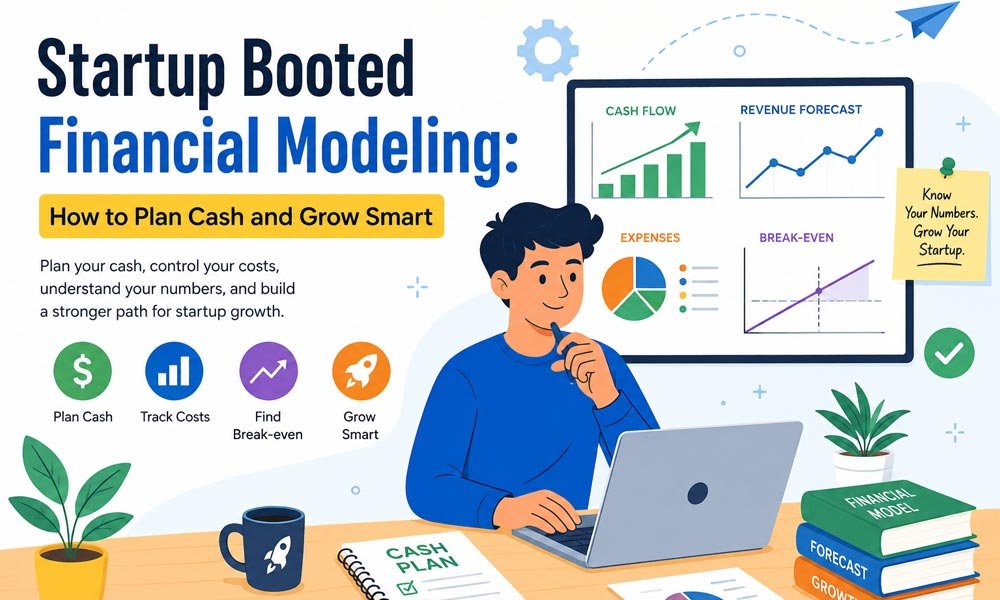
Starting a business can feel exciting. You have an idea. You find customers. Money starts coming in. Soon you may want better tools or more ads. You may even think about hiring someone to help with the work.
But there is one big question. Can your startup afford these choices? A business can make sales and still face cash problems. Bills may arrive before customer payments. One slow month can also change your whole plan.
This is where startup booted financial modeling can help. It gives you a clear view of sales and costs. It also shows your cash needs. In this guide we will learn how it works and how founders can use it in 2026.
What Is Startup Booted Financial Modeling?
Startup booted financial modeling is a way to plan the money of a self-funded startup. The business may use founder savings at first. After that it tries to pay its costs with money earned from customers.
The model shows what may happen over the next few months. It can track sales and costs. It can also show cash flow. Founders can use these numbers to decide how much they can safely spend.
Think of the model like a money map. It cannot tell the future. But it can show where trouble may appear. If cash could become low in six months then you can act before that problem arrives.
Why Startup Booted Financial Modeling Matters
A growing startup can look healthy while its cash is getting low. Imagine you make $10,000 in sales this month. That sounds great. But what if customers will not pay you until next month?
Your bills may still be due today. You might need to pay for software and workers. You may also have hosting or marketing costs. Startup booted financial modeling helps you see this gap before it becomes serious.
It also helps you make calmer choices. You can check if a new hire is affordable. You can test a larger ad budget. You can even see what happens if sales fall. The goal is simple. Protect cash while building steady growth.
Startup Booted Financial Modeling vs VC Funding
A bootstrapped startup mainly grows with its own money and customer sales. This makes cash very important. If the company spends more than it earns for too long then it may have no outside funding to cover the gap.
A VC-backed startup works differently. It may receive money from investors. That money can help the company hire faster. It may also support larger marketing plans. Some funded startups can accept losses while they try to grow.
Neither path is right for every company. But the money plan must match the path. A booted business often needs slower and safer growth. Its model should focus on real sales and healthy margins. It should also watch cash closely.
Core Parts of Startup Booted Financial Modeling
A useful model starts with revenue. How many customers do you have? What does each customer pay? How many new customers can you realistically win? These simple questions create the base of your revenue forecast.
Next come costs. Some costs stay quite stable each month. These may include software and salaries. Other costs change with sales. Ads and payment fees are common examples. One-time costs should also have their own place.
The model should then connect revenue and costs with cash flow. It should show runway and break-even too. Founders may also track gross margin and customer acquisition cost. Customer lifetime value and payback time can become useful as the company grows.
How to Forecast Startup Revenue
Good revenue forecasts start with numbers you can explain. Do not say your startup will earn $1 million simply because the market is large. Start with your customers and your real ability to sell.
Suppose you have 15 customers. Each pays $200 every month. Your monthly recurring revenue is $3,000. If you normally gain five new customers each month then you have a useful starting point for your forecast.
You should also include customers who leave. This is called churn. If you gain eight customers but lose two then your net gain is six. Startup booted financial modeling becomes much more useful when both growth and churn are included.
How to Plan Startup Costs
Now look at what the startup spends. Begin with fixed costs. These are costs that do not change much each month. Software plans and core salaries can fit here. Rent may also be a fixed cost.
Then list variable costs. These rise or fall as the business changes. Advertising is one example. Payment fees are another. Contractors and shipping may also fit here depending on the type of startup you run.
Do not forget one-time costs. You may need new equipment or legal help. A website update can also create an extra bill. Adding these costs helps your model stay closer to real life. It also lowers the chance of a nasty cash surprise.
Startup Booted Financial Modeling for Cash Flow
Revenue and cash are not always the same thing. Imagine you send a client a $5,000 bill today. The sale may count as revenue. But the client might not pay for 30 days. You cannot spend money that has not arrived.
A cash flow forecast tracks when money actually enters and leaves the business. Start with your opening cash. Add the cash you expect to receive. Then remove the money you expect to pay. What remains is your closing cash.
A short 13-week cash forecast can be useful for near-term planning. You can also keep a monthly forecast for the year ahead. Review both often. This gives a bootstrapped founder time to cut costs or improve sales before cash gets too low.
Runway and Break-Even for Booted Startups
Runway tells you how long your startup can keep going if it is losing cash each month. The basic idea is simple:
Runway = Cash Balance ÷ Monthly Net Burn
Suppose your startup has $60,000 in cash. It loses $8,000 each month. That gives about 7.5 months of runway. This does not mean the business will fail after 7.5 months. It means something needs to change before then.
Break-even gives you another important target. It is the point where revenue can cover business costs. One useful formula is:
Break-Even Revenue = Fixed Costs ÷ Gross Margin %
If fixed costs are $8,000 and gross margin is 70% then break-even revenue is about $11,429 per month. Reaching that point can give a bootstrapped startup much more room to plan its next stage.
Startup Booted Financial Modeling With CAC and LTV
Getting customers costs money. You may spend money on ads. You may pay for sales tools too. Customer Acquisition Cost or CAC shows how much you spend to gain one new customer. This number helps you control your growth costs.
The formula is simple. Divide your sales and marketing costs by the number of new customers. If you spend $1,000 and gain ten customers then your CAC is $100. A lower CAC can make growth easier to fund.
LTV means Customer Lifetime Value. It shows how much value one customer may bring over time. Compare LTV with CAC before spending more on growth. Also check how long it takes to earn your CAC back.
How to Build a Startup Booted Financial Model
You do not need costly software to begin. Excel or Google Sheets can work well. Start with a simple page for your main facts. Add your price and customer count. Add expected growth and churn too.
Next create your monthly forecast. Add revenue first. Then add fixed costs and variable costs. Include your starting cash. Your sheet should show the money gained or lost each month and your closing cash balance.
Build a forecast for 12 to 18 months. Keep all key assumptions in one clear place. This makes startup booted financial modeling easier to update. You can change one number and quickly see how it affects future cash.
Test Your Startup Booted Financial Modeling Plan
The future will never follow your spreadsheet perfectly. Sales may slow down. A customer may leave. An important tool may cost more. This is why you should test several possible outcomes before making a big choice.
Start with three cases. Your base case should show the result you truly expect. Your best case can show stronger sales. Your worst case should show slower growth and higher costs. It may also include more customer churn.
Now look at the cash balance in each case. Does the startup still have enough money during the bad case? If not then you have found a risk early. You can cut costs or delay hiring before the risk becomes real.
Real Startup Booted Financial Modeling Example
Imagine a small B2B software startup. Its plan costs $99 each month. It begins with 20 paying customers. That gives the company $1,980 in monthly recurring revenue or MRR.
The startup has $2,400 in fixed monthly costs. It also spends $400 on ads. At first the business spends more than it makes. But the founder adds new customers each month while keeping costs under control.
By month six the startup reaches about 60 customers. That means $5,940 in MRR before churn or other changes. The founder can now compare revenue with costs. The model shows when cash flow turns positive and when break-even arrives.
Best Tools for Startup Booted Financial Modeling
Google Sheets is a good place to start in 2026. It is simple and works well for small teams. Founders can share the model with a partner. They can also update numbers without buying complex finance software.
Excel is another strong choice. It works well when your model becomes larger. AI assistants can also help explain formulas. They can help test ideas too. Still you should always check important numbers before using them for a business choice.
Automation can save more time as the startup grows. Payment and sales data can be moved into your reports with connected tools. The goal is not to own the fanciest software. Choose tools that make your numbers easier to understand.
Common Startup Booted Financial Modeling Mistakes
One common mistake is making sales forecasts too hopeful. A founder may expect sales to rise every month without proof. A better model uses real customer data. It should also include slow months and customer churn.
Another mistake is forgetting when money arrives. A $10,000 sale looks great on paper. But it cannot pay today’s bills if the customer pays two months later. Your cash forecast must show the real payment date when possible.
Founders can also forget one-time costs or hire too early. Some never test a bad case. Others build a model and leave it untouched for months. Startup booted financial modeling works best when the numbers stay close to real life.
Keep Your Startup Financial Model Updated
Your model should change as your startup changes. Set time aside each month to compare your forecast with the real results. Check how much revenue came in. Then compare your planned costs with what you actually spent.
Update your cash balance next. Check your burn rate and runway again. Review new customers and lost customers. Look at CAC and LTV too. These numbers can show whether growth is becoming stronger or more costly.
Then update your next 12 months. If sales were 20% lower than planned then find out why. If costs jumped then check what caused it. Small monthly reviews can stop small money problems from becoming much bigger ones.
Conclusion
Startup booted financial modeling is more than a spreadsheet. It gives a self-funded founder a clearer view of the road ahead. It shows what the business earns and spends. It also shows how much cash remains.
You do not need a perfect model on day one. Start with simple numbers you trust. Track revenue and costs. Watch cash flow and runway. Find your break-even point. Then improve the model as you learn more about your customers.
In 2026 many tools can make this work faster. But good tools cannot replace good numbers. Keep your plan simple and update it often. When real numbers guide your choices you can protect cash and grow with more control.
Continue reading: Growth Navigate Funding: A Simple Guide for Business Growth