
 By Admin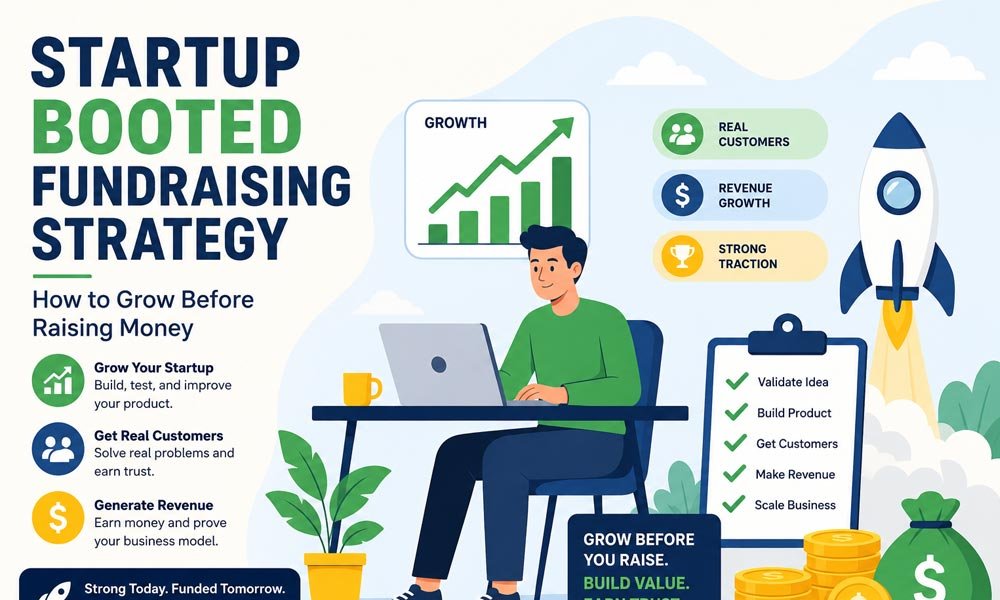
Starting a business can feel exciting. It can also feel costly. Many founders think they need investors before they can grow. But that is not always true. A small business can start earning money before it gets outside funding.
This idea is behind the startup booted fundraising strategy. You focus on customers first. You earn early revenue. You keep costs low. Then you use that money to make the business stronger. Investors can come later if you need them.
This way of building a startup is useful in 2026. Small teams now have many low-cost tools. AI can also help with daily work. In this guide we will explain how this strategy works and how founders can use it.
What Is a Startup Booted Fundraising Strategy?
A startup booted fundraising strategy is a simple way to build a company. The founder starts with limited money. The main goal is to find customers and earn revenue before asking investors for a large amount of cash.
Think about a founder making a simple online tool. Instead of raising money to hire ten people the founder may build a small version first. Five customers pay for it. Their money helps improve the tool. This gives real proof.
This does not mean outside funding is bad. A founder may still raise money later. The key difference is timing. Funding comes after the business has shown signs that it works. This can give the founder a stronger place to negotiate.
Why Startup Booted Fundraising Strategy Matters in 2026
The startup world has changed. Investors often want more proof before they put money into a young company. A good idea may not be enough. They may want to see customers. They may also want sales and signs of steady growth.
At the same time it can cost less to start some digital businesses. AI tools can help with writing. They can help with research and support. Online tools can also help a small team manage sales and other daily work.
This makes a startup booted fundraising strategy useful in 2026. Founders can test ideas without building a large team first. They can learn what customers need. If they later meet investors they can show real results instead of only making promises.
How a Startup Booted Fundraising Strategy Works
The process starts with a real problem. A founder finds something that people need help with. Then the founder talks with possible customers. The goal is to learn if the problem is important enough for people to pay for a solution.
Next comes a small product. It does not need every feature. It only needs to solve the main problem well. The founder can sell this early version. Feedback from those first customers can show what should be fixed or added next.
Revenue then goes back into the company. Some money may improve the product. Some may support sales or customer care. The cycle is simple. Find a problem. Build a useful solution. Sell it. Learn. Improve it. Then repeat.
Validate Your Idea Before Spending Money
An idea may sound great in your head. That does not mean customers will pay for it. This is why testing demand is an important early step. It can stop founders from spending months building something that nobody truly needs.
Start by speaking with people who face the problem. Ask how they deal with it today. Find out what makes the problem hard. You can then show them your planned solution. A simple landing page or small demo may be enough.
The strongest test is often a real payment. A signup can show interest. A payment shows stronger demand. Some businesses can test paid trials or pre-orders. The exact method depends on the product. The goal is to find real buying interest early.
Startup Booted Fundraising Strategy and the First Dollar
Your first dollar may seem tiny. Yet it can tell you something very important. Someone saw enough value in your product to pay for it. That is much stronger than a friend saying your business idea sounds good.
Do not worry about getting thousands of customers at first. Try to get one paying customer. Then learn why that person bought. Find a second customer. Look for the same needs. This slow start can teach you a lot about your market.
The startup booted fundraising strategy turns these early sales into useful proof. They can help you test your price and offer. Over time you want to see if sales can happen again and again. Repeat sales are more useful than one lucky order.
Build a Small Product That Makes Money
Once you see real demand you can build a small first product. This is often called a minimum viable product or MVP. The name sounds complex. The idea is simple. Build only what customers need to solve the main problem.
Imagine you want to create software for small shops. You may dream of twenty features. But customers may only need a simple way to track orders. Start there. Let people use it. Watch what works and listen to what causes problems.
Do not wait for perfection. A useful product in a customer’s hands can teach you more than months of private work. Launch a simple version. Charge a fair price. Then improve it with real feedback. This also helps protect your limited startup cash.
Keep Your Startup Lean and Protect Cash
Money gives a young startup time. If you spend it too quickly you may run out before the business becomes strong. A lean startup tries to keep its main costs low while still spending where the company truly needs help.
This can mean waiting before hiring a large team. Contractors may work for some short projects. AI and simple software can help with repeat work. A remote team may also reduce some costs. But cheap should never mean poor service or weak quality.
Founders should also watch burn rate and runway. Burn rate shows how much cash the company uses each month. Runway shows how long the current cash may last. Watching both helps founders spot money problems early and make calmer choices.
Reinvest Revenue to Build Strong Growth
Making money is only the start. A booted startup must decide what to do with that money. Good reinvestment can help the company grow. Poor spending can quickly remove the safety that early revenue created.
Put money into areas that already show value. If one sales channel brings good customers at a fair cost then test putting more money there. If customers leave because onboarding is confusing then fixing onboarding may be a better use of cash.
Avoid spending only because something looks impressive. A fancy office or costly brand change may feel exciting. But it may not help customers. Under a startup booted fundraising strategy each major expense should have a clear job. Spend where it helps the business become stronger.
At this stage the startup has moved from an idea toward a working business. It has tested demand. It has earned early revenue. It has built a useful product and started putting money back into growth.
The next step is knowing whether that growth is truly healthy. In the second half we will look at the key startup numbers to track. We will also cover funding choices and common mistakes. Finally we will explain when it may be time to raise outside money.
The first half showed how founders can start small. They can test demand and earn early sales. They can also protect cash and put revenue back into growth. Now it is time to see how healthy that growth really is.
Good numbers can help with this. They show what works and what needs care. They can also help when a founder wants funding later. Let us look at the next steps in a startup booted fundraising strategy.
Track the Right Startup Booted Fundraising Metrics
Revenue is important. But revenue alone does not show the full health of a startup. Founders need a few simple numbers. These numbers can show if customers stay and if each new sale makes good business sense.
MRR means monthly recurring revenue. It shows repeat income each month. CAC shows what you spend to get one customer. LTV shows how much value one customer may bring over time. A healthy LTV should be higher than CAC.
Also watch gross margin and customer churn. Churn tells you how many customers leave. NRR can show how revenue from current customers changes. Burn rate and runway help you watch cash. Revenue per worker can also show how lean the team is.
Find Funding Without Giving Up Too Much Equity
A startup booted fundraising strategy does not mean you must avoid all funding. It means you choose money with care. Venture capital is only one choice. Other forms of funding may help without giving away a large share of your company.
Customers can sometimes provide useful cash. For example a software company may offer an annual plan. Customers pay for a year in advance. Some startups may also use grants or startup programs. A business partner may help fund a useful project.
Revenue-based funding is another choice for some firms. Money is provided and paid back using part of future revenue. Debt may also work in some cases. Each choice has costs and risks. Always read the terms before making a deal.
Common Startup Booted Fundraising Strategy Mistakes
Growing too fast is a common mistake. Imagine getting ten customers and quickly hiring a large team. What happens if those customers leave next month? The business now has higher costs but no strong base to support them.
Low prices can also cause trouble. Founders sometimes charge too little because they fear losing buyers. Yet a very low price can make it hard to cover costs. Test pricing carefully. Focus on the value customers get from your product.
There is another side to this problem. Being lean does not mean refusing to spend. If a proven sales channel brings strong results then investing more may make sense. The goal is smart spending. It is not avoiding every business cost.
When to Raise Money After Bootstrapping
There may come a time when outside money can help the company grow much faster. The key is knowing why you want it. Raising money simply because other startups do it is not a strong reason.
Look for clear signs. Revenue may be growing steadily. Customers may stay for a long time. More buyers may want the product than your team can serve. You may also have one proven growth channel that could become much larger with extra cash.
This is where the startup booted fundraising strategy can become powerful. You are no longer selling investors only an idea. You can show customers and sales. You can explain what works. You can also show exactly how new money could support growth.
Raise From Strength Instead of Need
Think about two founders meeting an investor. One has little cash and no customers. The other has steady sales and enough runway to keep operating. Which founder has more freedom to reject a poor deal? Usually it is the second founder.
That freedom matters. A founder who does not urgently need cash can take more time. They can compare offers. They can think about ownership and control. They can also look for investors who understand the company and its market.
Try to build investor links before money becomes urgent. Keep useful business records too. Know your revenue and costs. Know how customers behave. When the time comes to raise you will have a much clearer story to tell.
Choose Investors Who Fit the Business
Money is only one part of an investment deal. The investor can matter too. A good investor may understand your market. They may introduce useful people. They may also help the company during difficult times.
Do not choose an investor only because the check is large. Learn about their past deals. Understand what they expect from founders. Look closely at the amount of ownership you may give away and any rights included in the deal.
The goal is not to raise the largest round possible. It is to get the right amount for a clear reason. Good funding should help an already healthy business move faster without creating costs it cannot support later.
Conclusion
A startup booted fundraising strategy starts with a simple idea. Build something people want. Find paying customers. Keep costs under control. Learn from real sales. Then use the money you earn to make the company better.
This path may take patience. Growth can be slower at first. Yet founders may keep more control and learn from customers sooner. They can see what works before making large bets. They may also have more choices about funding later.
Bootstrapping does not mean investors are bad. It means funding should have a clear purpose. Raise when money can speed up something that already works. Do not make funding the only thing keeping the company alive.
In 2026 small teams have more tools to help them build and run a company. But tools do not replace a good business. Customers still need a reason to buy. Revenue still needs to cover costs. Smart choices still matter.
A strong startup booted fundraising strategy puts those basics first. Build useful value. Earn trust. Protect cash. Track the right numbers. Grow what works. Then if outside funding can help you move faster you can raise it from a much stronger place.
Continue reading: Startup Booted Financial Modeling: How to Plan Cash and Grow Smart