
 By Admin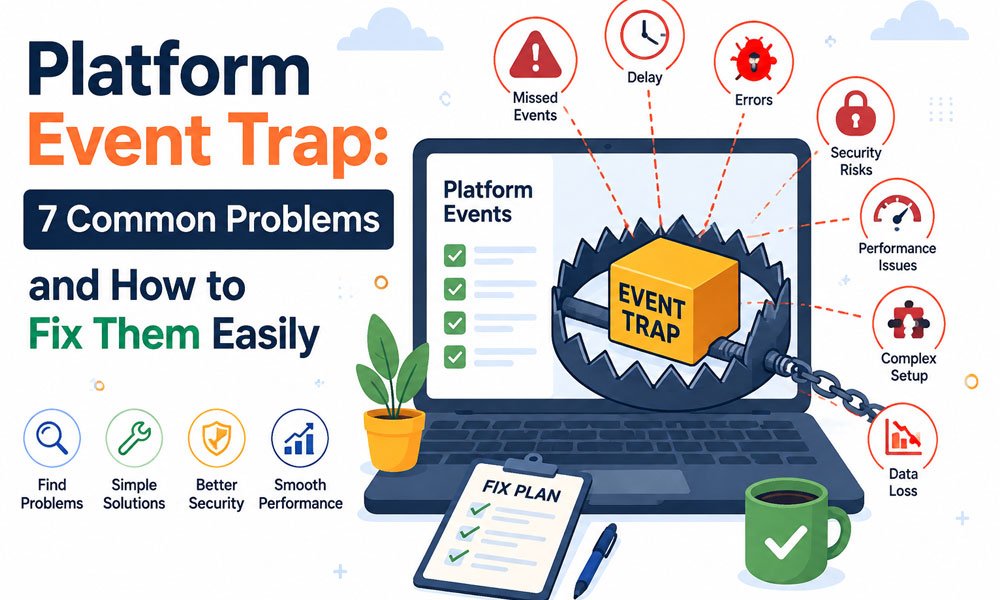
Today, businesses depend on digital systems more than ever. Companies use different apps, tools, and platforms to share information quickly. Event-based systems help these tools communicate without waiting for every action to finish first. This makes work faster, smoother, and more connected.
However, these systems also bring new challenges. A small mistake in planning, security, or setup can create bigger problems later. Many teams only notice these issues when their system grows, more users join, or the amount of data becomes much higher.
This is where the Platform Event Trap becomes important. A Platform Event Trap happens when teams use event systems without fully understanding how they work. These mistakes can lead to delayed data, failed processes, security problems, and unexpected system issues.
In this article, we will explain what a Platform Event Trap means, why it happens, and the seven common problems that cause these issues. We will also share simple ways to fix them and build stronger event systems that can support future growth.
What Is a Platform Event Trap?
A Platform Event Trap is a group of common mistakes that happen when organizations use event-based systems in the wrong way. These mistakes usually come from poor planning, missing security steps, weak testing, or misunderstanding how events are processed.
Think of an event like a message being sent from one system to another. For example, when a customer updates information in Salesforce, an event can notify another system that something has changed. The other system can then take action based on that message.
The idea sounds simple, but things can become difficult when hundreds or thousands of events are moving every day. If the system is not designed properly, messages may arrive late, repeat multiple times, or fail completely. This is how a Platform Event Trap can appear.
Many companies face problems because their system works well during early testing but struggles after moving into real business use. More users, more data, and more connections can expose hidden problems that were not visible before.
For example, a company may create an event system to update customer information between two platforms. During testing, everything works perfectly. But after launch, thousands of updates happen daily, and the system starts creating duplicate records or missing important updates.
Understanding the Platform Event Trap early helps businesses avoid these problems. Instead of fixing failures after they happen, teams can create safer systems from the beginning.
Why Platform Event Traps Create Big Problems
Modern businesses use event systems because they provide speed and flexibility. They allow different applications to communicate without being directly connected all the time. This makes it easier to manage large systems and complex workflows.
But with more flexibility comes more responsibility. Event systems need careful design because many parts work together. If one part fails, it can affect other connected systems.
A Platform Event Trap can create problems such as:
-
Missing important data
-
Duplicate information
-
Slow processing
-
Security risks
-
System downtime
-
Failed business processes
These problems can be costly. Imagine an online store where customer orders are sent through an event system. If events fail, customers may place orders, but the warehouse system may not receive the information. This can create delays and unhappy customers.
Another common issue is that some teams focus only on making events work, but they do not plan for future growth. A system that handles 100 events today may struggle with 100,000 events later.
A strong event system needs more than basic setup. It needs good design, regular checks, proper security, and careful testing. By understanding the risks early, teams can avoid falling into the Platform Event Trap.
Platform Event Trap Problem #1: Using Events for the Wrong Tasks
One of the biggest mistakes is using Platform Events for tasks they were not designed to handle. Platform Events are mainly created for asynchronous work. This means the action does not need to happen instantly.
Some teams use Platform Events because they think they are the fastest solution for everything. However, this can create problems when users expect immediate results.
For example, imagine a customer clicks a button and expects their screen to update instantly. A Platform Event may not be the best choice because the event needs time to move through the system and reach the right place.
For quick user actions, other tools may work better. In Salesforce, tools like Lightning Web Components, Apex triggers, or Flow can be better choices for actions that need immediate responses.
Platform Events are more useful for background work. They are great for tasks like:
-
Connecting different systems
-
Sending updates between applications
-
Starting background processes
-
Sharing business information
A simple way to remember this is: if a user needs an instant answer, use a direct method. If a system needs to share information in the background, Platform Events can be a better option.
Using the right tool for the right job is one of the easiest ways to avoid a Platform Event Trap.
Platform Event Trap Problem #2: Ignoring Event Order and Duplicate Events
Another common Platform Event Trap happens when teams assume every event will arrive in the exact order it was created. In real systems, this is not always guaranteed.
Events can sometimes arrive late because of network delays, system load, or processing issues. A newer event may reach a system before an older event.
For example, imagine a customer changes their address. First, the system creates an event with the old address update. Later, another event is created with the new address. If these events are processed in the wrong order, the system may save incorrect information.
Duplicate events can also create problems. Sometimes the same event may be delivered more than once. If the system processes both events without checking, it may create duplicate records or repeat the same action.
To prevent this issue, teams should create systems that can handle repeated events safely. This is called idempotent processing.
Simple solutions include:
-
Using unique event IDs
-
Tracking completed events
-
Checking if an action already happened
-
Keeping clear processing records
A good event system should expect problems and handle them smoothly. Planning for delays and duplicates helps prevent a major Platform Event Trap.
Platform Event Trap Problem #3: Missing Limits and Performance Issues
Every event system has limits. These limits control how much data can move through the system and how many events can be processed at one time.
A common mistake is ignoring these limits until the system starts failing. During early stages, a company may have a small amount of data, so everything works well. But as the business grows, event traffic can increase quickly.
For example, a company may start with a few hundred customer updates every day. After expansion, that number may become thousands or millions. If the system was not designed for growth, it may become slow or unstable.
Problems caused by ignoring limits include:
-
Failed events
-
Processing delays
-
System slowdowns
-
Blocked transactions
To avoid this Platform Event Trap, teams should monitor event usage regularly. They should know how many events they process, how long they take, and when the system is reaching its limits.
Good planning also helps. Businesses should think about future growth instead of only solving today’s needs. A strong event system should be ready for tomorrow’s challenges.
Platform Event Trap Problem #4: Testing Only in Small Environments
One of the biggest reasons companies face a Platform Event Trap is because they only test their systems in small environments. A system may work perfectly during early testing, but real business conditions can be very different.
In a small testing environment, there may be fewer users, less data, and fewer connected systems. This makes problems harder to notice. When the same system moves to production, the amount of activity can increase quickly.
For example, a company may test a customer update event with only 50 records. Everything works well. But after launch, thousands of customers update their information every day, and the system starts slowing down or missing events.
To avoid this problem, teams should test in conditions that look similar to real use. Good testing should include:
-
Large amounts of data
-
Multiple users working together
-
Real system connections
-
Different security settings
-
Possible failure situations
Testing should not only ask, “Does it work?” It should also ask, “Will it still work when our business grows?”
A proper testing plan helps teams find problems before customers and employees experience them. This is one of the best ways to stay away from a Platform Event Trap.
Platform Event Trap Problem #5: Weak Security and Unsafe Access
Security is another important area where companies can fall into a Platform Event Trap. Event systems often move valuable business information, so protecting that information should always be a priority.
A common mistake is giving too much access to event subscribers. When too many people or systems can view event data, sensitive information may be exposed.
For example, a company may connect an outside application to receive customer updates. If that connection is not properly protected, someone without permission could access important business data.
Some common security mistakes include:
-
Missing user authentication
-
Sharing event access too widely
-
Poor permission settings
-
Not protecting sensitive information
To build a safer event system, companies should use strong security steps. These include:
-
Using secure login methods like OAuth
-
Limiting access only to needed users and systems
-
Protecting important data fields
-
Reviewing access regularly
Security should not be added only after a problem happens. It should be part of the system design from the beginning.
A secure event system builds trust and reduces the chance of unexpected problems. Good security planning helps prevent another type of Platform Event Trap.
Platform Event Trap Problem #6: Poor Monitoring and Error Handling
Many companies create event systems but forget one important thing: monitoring. Without proper monitoring, teams may not know when something goes wrong.
A Platform Event Trap can stay hidden for a long time if nobody checks system performance. Small delays can become bigger problems, and failed events can affect important business tasks.
Imagine a company sending thousands of order updates every hour. If some events fail, the company needs to know quickly. Without alerts, the problem may only be discovered when customers complain.
A good monitoring system should track:
-
Number of events being processed
-
Failed events
-
Processing speed
-
System delays
-
Subscriber performance
Teams should also create clear recovery plans. If an event fails, they should know:
-
What caused the problem
-
How to fix it
-
How to recover lost information
Regular monitoring helps companies find problems early. Instead of waiting for a major failure, teams can solve small issues before they become serious.
Platform Event Trap Problem #7: Poor Event Design and Documentation
Another common mistake is creating event systems without clear planning. A system may work today, but future teams may struggle if nobody understands how it was built.
Good documentation explains how events move through the system. It helps developers, administrators, and business teams understand what each event does.
Without proper documentation, simple changes can become risky. A new team member may change one part of the system without knowing how it affects other connected services.
Important things to document include:
-
Event purpose
-
Data fields
-
Connected systems
-
Processing steps
-
Error handling methods
For example, if a company has an event that updates customer information, the team should know where the event starts, where it goes, and what happens after it arrives.
Clear documentation makes future updates easier and safer. It reduces confusion and helps companies avoid another Platform Event Trap as their systems continue to grow.
Best Ways to Avoid the Platform Event Trap
Avoiding a Platform Event Trap is not about avoiding event systems completely. Platform Events can be very useful when they are planned and managed correctly.
The first step is creating a simple and clear design. Teams should understand why they need events and what problems they are trying to solve.
Some important best practices include:
-
Use events only for the right tasks
-
Design systems that can handle delays
-
Prepare for duplicate events
-
Monitor system health
-
Protect event data
-
Test before going live
A good event system should be flexible. Business needs change over time, and technology must be able to grow with those changes.
Companies should also review their event systems regularly. A system that works today may need improvements as more users, data, and connections are added.
When Should You Use Platform Events?
Platform Events are powerful tools, but they are not the answer for every situation. Knowing when to use them is important for avoiding mistakes.
They work best when information needs to move between systems without requiring an instant response.
Good examples include:
-
Connecting Salesforce with other business systems
-
Sending customer updates between applications
-
Starting background workflows
-
Sharing business data with external tools
-
Supporting large data processes
For example, a company may use Platform Events to send new customer information from Salesforce to a marketing system. The marketing system can process the update without slowing down the main Salesforce activity.
Platform Events are also useful for real-time notifications where a small delay is acceptable. They help systems work together in a smart and organized way.
However, they are not ideal for:
-
Instant screen updates
-
Immediate user actions
-
Fast data validation
For those tasks, direct methods are usually better.
Choosing the right tool at the right time is one of the easiest ways to avoid a Platform Event Trap.
Building a Strong Event System Without Risks
A strong event-driven system needs careful planning, regular testing, and good security. Companies that follow these steps can enjoy the benefits of event technology without facing major problems.
The most important idea is to understand that events are designed for connection and communication. They should make systems easier, not create extra confusion.
Businesses should focus on:
-
Clear event design
-
Strong security
-
Reliable testing
-
Regular monitoring
-
Simple documentation
When teams follow these practices, they can create systems that are faster, safer, and easier to manage.
In 2026, more businesses are depending on connected technology. Event systems will continue to grow, and companies that understand the risks will have a big advantage.
The Platform Event Trap does not happen because events are bad. It happens when they are used without the right planning. With the right approach, businesses can build reliable systems that support growth and future success.
Continue reading: Tech Giants Envision Future Beyond Smartphones